
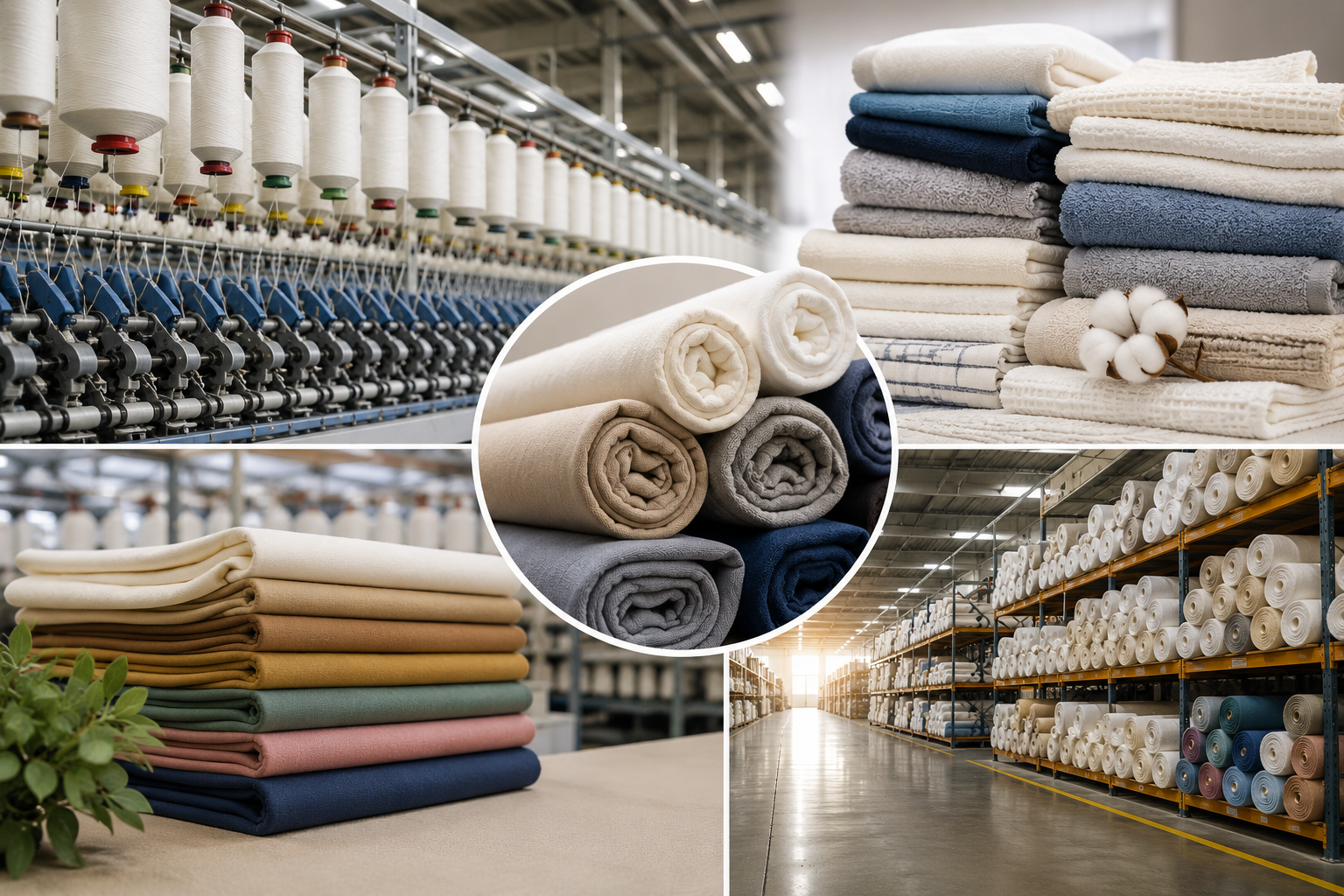
India boasts of one of the most diverse collections of textile ecosystems in the world which includes all types of natural and man made fibres, yarns, woven and knitted textiles, home textiles, clothing as well as technical textiles. To foreign purchasers, this renders India a valuable sourcing model of one-sized fits all, as well as tailor made textile merchandise.
To the buyers who consider the ability to do business with a textile company in India, the ability to manufacture a given range of products, quality systems, customizations, certifications, lead times, and export experience should be analyzed as significant issues than the size itself.
This guide highlights 10 leading textile companies in India and explains what buyers should consider when selecting an Indian textile manufacturer or supplier.
Why India Is a Leading Textile Manufacturing Hub
India boasts a strong textile value chain comprising raw materials, spinning, weaving, processing, manufacturing, and finished goods. Its access to cotton and other fibers, developed manufacturing clusters, qualified workforce and the large national market base provide Indian manufacturers a good base in serving international consumers.
Flexibility in manufacturing is another strength to B2B buyers. Businesses may procure standard products or specification with fabric composition and GSM, construction, color, finishing, dimensions, packaging, and private labeling depending on the supplier.
Top 10 Textile Companies in India
There is no single official ranking of India’s “top 10” textile manufacturers because companies operate across different segments and business models. The following list focuses on prominent Indian textile manufacturers and suppliers with significant production capabilities, established market presence, and relevance to domestic and international buyers.
1. Sandex Corp
Sandex Corp is a textile manufacturing and sourcing company serving businesses looking for textile products tailored to their specific requirements. Its position in the Indian textile ecosystem makes it relevant to buyers seeking customized textile solutions, bulk sourcing, and dependable manufacturing support.
For B2B purchasers, Sandex Corp can be considered when requirements involve product specifications, customization, quality expectations, bulk quantities, and coordinated textile sourcing. Buyers should assess the company’s capabilities based on the exact product category, material, specifications, order volume, and destination market.
2. Welspun Living
One of the most renowned manufacturers of home textiles in India is Welspun Living, and the company has a good international presence in its products including towels, bed linen, rugs and other products in the home textile category.
The company is specifically applicable to the customers who require mass production of home textiles and the ability to export the products. Its portfolio caters to retail/hospitality needs and other institutional needs.
3. Vardhman Textiles
Vardhman Textiles is a big vertically integrated textile manufacturer that operates on the production of yarns, fabrics, garments, acrylic fibers and threads.
The company reports the yearly volume of production of about 240,000 metric tons of yarns and 220 million meters of the woven fabrics. Its combination manufacturing concept offers more control over the consistency of the products, their traceability as well as planning of their production.
4. Arvind Limited
Arvind Limited, based in Gujarat, is an Indian company that is well-established as a manufacturer of textiles, especially denim and woven textiles.
Its production capacity covers production of fabric, fabric processing, denim, and apparel production. The company has established contacts with the international markets of fashion and apparel.
5. Trident Limited
Trident Limited is a diversified manufacturer with a significant presence in home textiles, especially towels and bed linen.
The company is known for large-scale production and serves domestic as well as international markets. Its product portfolio makes it relevant to retailers, hospitality businesses, institutional buyers, and distributors sourcing home textile products.
6. KPR Mill
KPR Mill is a mill that manufactures, both textile and apparel, in Tamil Nadu. It has its operations in spinning, yarn production, fabrics, and garments.
The vertically integrated structure of the company allows it to control the various phases of the production process. This may be of use to the apparel and textile purchasers who are in need of having more control about the quality, production fluidities as well as coordination of the supply-chain.
7. Raymond
Raymond has a long-established presence in India’s textile industry and is particularly associated with premium suiting and shirting fabrics.
Its textile operations have historically focused on high-quality fabrics and specialized wool and blended textile products. The company is therefore relevant to buyers looking for premium fabrics rather than only high-volume commodity textiles.
8. Gokaldas Exports
Gokaldas Exports is a well-established manufacturer of Indian apparel, which mainly deals with the export of garments.
Its abilities apply to mainstay fashion companies, retailers, and sourcing agencies interested in bulk manufacturing of apparel. It functions within the environment of the export manufacturing industry of India, and is one of the several textile and clothing firms that appear regularly in any listings of the industry.
9. Indo Count Industries
Indo Count Industries is an important Indian home textile manufacturer with a strong focus on products such as bed linen and related home textile categories.
The company is particularly relevant to international buyers looking for finished home textiles rather than only raw fabric or yarn.
Its position in the home textile segment makes it suitable for retailers, hospitality businesses, distributors, and private-label brands seeking products manufactured for international markets.
10. Himatsingka Seide
Himatsingka Seide is an Indian textile company that deals in home textile and their products such as bedding.
The company can also expertise both in textile production and finished home textile products making it very useful to international customers who want differentiated fabrics and finished products.
The products available from Indian textile manufacturers vary considerably by company, manufacturing setup, and target market. Common categories include:
Key Products Offered by Leading Textile Companies
- Cotton, organic cotton, polyester, linen, viscose, blended, and recycled-fiber fabrics
- Spun and blended yarns
- Woven and knitted fabrics
- Denim and apparel fabrics
- Towels, bath linen, bed linen, and other home textiles
- Garments and finished apparel
- Institutional and hospitality textiles
- Technical and specialty textiles
- Private-label and OEM textile products
Fabric Composition
The materials manufacturers can collaborate with include cotton, organic cotton, Polyester, linen, viscose, mixes, and recycled fibers. The composition to use is influenced by the performance needed, the application required and the cost as well as long term sustainability standards.
Fabric GSM
GSM, or grams per square meter, indicates fabric weight. Different GSM ranges may be appropriate for towels, bedding, apparel, upholstery, hospitality products, and other applications.
Weave and Construction
Common constructions include plain, twill, satin, jacquard, waffle, terry, and customized structures. The selected construction influences the fabric’s appearance, texture, strength, absorbency, and performance.
Color and Finishing
Depending on the product, manufacturers may offer reactive, pigment, yarn-dyed, or custom-dyed fabrics. Additional finishing options can include softening and other treatments required for the intended application.
Size and Specifications
Bulk orders can often be produced according to buyer-defined dimensions, weights, patterns, designs, and packaging requirements. Specifications should be documented clearly before sampling and mass production.
Durability
Business purchasers might need certain performance qualities such as good stitching, colorfastness, shrinkage and repeated washing. Hospitality, healthcare and institutional applications especially require these requirements.
Customization
Most B2B textile producers are able to handle custom fabrics, prints, embroidery, labels, packaging, and individual label. Availability of customization is based on the availability of manufacture machinery, minimum quantities of orders and production capacities.
How to Choose the Right Textile Company in India
Selecting a supplier should involve more than comparing the quoted price. Buyers should assess whether the manufacturer can consistently meet technical, commercial, and delivery requirements.
Consider the following factors:
Product expertise: Choose a manufacturer with proven experience in your specific product category.
Manufacturing capacity: Confirm whether the supplier can support your expected order volumes during peak production periods.
Quality control: Ask about inspection procedures, testing, sampling, and batch-level quality controls.
Customization: If you need specific GSM, construction, colors, dimensions, labels, or packaging, confirm these capabilities before placing an order.
Minimum order quantities: Different manufacturers have different MOQs based on fabric type, color, production process, and order complexity.
Lead times: Discuss sample development, production, inspection, and shipping timelines before finalizing the supplier.
Export experience: International buyers should consider a supplier’s experience with export documentation, packaging, logistics, and destination-market requirements.
Communication: Clear technical documentation and responsive communication can significantly reduce production errors.
Quality Standards and Certifications in the Textile Industry
The attributes of quality differ depending on the product and destination market. The international buyers must locate some standards that are applicable until they choose a manufacturer.
Buyers might seek certifications or compliance in the product and market depending on the product and the market compliance which may include:
- Quality management systems
- Environmental management
- Organic fibers
- Recycled materials
- Chemical management
- Social and ethical manufacturing
- Product safety
- Destination-country regulations
Textile Manufacturing for Domestic and Global Buyers
Indian textile manufacturers serve both domestic businesses and international buyers. The sourcing model can range from purchasing standard fabrics to developing completely customized products.
For global buyers, a typical process may include:
- Defining the product and technical specifications
- Shortlisting suitable Indian manufacturers
- Reviewing supplier capabilities and certifications
- Requesting samples or prototypes
- Approving fabric composition, GSM, construction, color, and finishing
- Confirming MOQ, pricing, payment terms, and production timelines
- Conducting quality inspections
- Completing packaging and export documentation
- Coordinating international shipment and delivery
Why Choose Indian Textile Manufacturers and Exporters?
India’s textile industry offers several advantages for international B2B buyers.
Broad material selection: Buyers can source cotton, organic cotton, polyester, linen, viscose, recycled fibers, and blended materials from the country’s extensive textile ecosystem.
Manufacturing diversity: India supports everything from yarn and fabric manufacturing to home textiles, apparel, and specialized products.
Customization: Many manufacturers can adapt products to specific technical and commercial requirements.
Scalable production: Large manufacturers can support wholesale and export orders, while specialized suppliers can serve more focused requirements.
Established export ecosystem: India’s textile sector has long-standing connections with international markets and global supply chains.
Multiple sourcing clusters: Buyers can explore manufacturers across established textile regions, including Gujarat, Punjab, Tamil Nadu, Maharashtra, Karnataka, and other production centers.
For buyers comparing suppliers, the right choice ultimately depends on product requirements rather than geography or company size alone.
Final Thoughts
India is still a significant sourcing destination for businesses looking for textile manufacturers and suppliers serving both domestic and international markets. Companies such as Welspun Living, Vardhman Textiles, Arvind, Trident, KPR Mill, Raymond, Gokaldas Exports, Indo Count Industries, Himatsingka Seide, and other established manufacturers represent the diversity of India’s textile ecosystem.
However, the right textile company in India for a specific buyer depends on factors such as product category, material, technical specifications, order volume, customization requirements, quality expectations, certifications, lead times, and target market.
If you are looking for reliable textile manufacturing or sourcing support in India, Sandex Corp can help you explore suitable textile solutions based on your product specifications, quantity, customization requirements, and target market. Contact Sandex Corp to discuss your textile sourcing or manufacturing requirements and find a solution that fits your business needs.
FAQs
Yes. Depending on their capabilities, manufacturers may offer customized fabric compositions, GSM, constructions, colors, finishes, dimensions, prints, embroidery, labels, packaging, and private-label solutions.
1. Can Indian textile companies manufacture customized products?
2. What should international buyers check before choosing a textile manufacturer?
International buyers should evaluate product expertise, manufacturing capacity, MOQ, quality controls, certifications, customization options, lead times, pricing, export experience, and communication processes.
3. Are Indian textile manufacturers suitable for bulk orders?
Yes. India’s textile ecosystem includes large-scale manufacturers capable of handling wholesale, OEM, private-label, institutional, and international export orders. However, production capacity and MOQ vary between suppliers.
4. What fabric materials are available from Indian textile companies?
Common materials include cotton, organic cotton, polyester, linen, viscose, recycled fibers, and blended fabrics. Availability depends on the manufacturer’s specialization and production capabilities.
5. Why do international buyers choose textile manufacturers in India?
International buyers can benefit from India’s broad raw-material base, established manufacturing clusters, diverse product capabilities, customization options, skilled workforce, and developed export ecosystem.
 English
 Arabic
 Dutch
Dutch French
 German
 Greek
Greek Indonesian
 Italian
 Japanese
 Korean
 Nepali
 Portuguese
 Russian
 Spanish
 Thai
Thai